NCDC | MOHFW
Skip to Main Content Sitemap Screen Reader Access

National Centre for Disease Control

Directorate General of Health Services, Ministry of Health & Family Welfare
Government of India

How to Reach NCDC Guest House & PG Hostel NCDC Newsletter Epi-Dis-PHERE-Publication of Health Resilience Quarterly e-journal of National Centre for Disease Control NCDC NPHICON 2024 Media Gallery Citizen Charter Grievance RTI Help Feedback
NCDC Header
← Back

Antimicrobial Resistance (AMR) Containments

National Guidelines for Infection Prevention and Control in Healthcare Facilities, MoHFW 2020 Training Modules

Antimicrobial Resistance (AMR) has emerged as a global crisis that requires urgent action. Excessive antimicrobial use in human and animal medicine have selected multidrug-resistant microorganisms, which have led to untreatable infections, more in vulnerable patient populations. Healthcare facilities are high risk environments for the development and spread of drug resistance and frequently have the highest burden of multidrug resistant organisms.

Strengthening Infection Prevention and Control (IPC) is the 3rd strategic priority under India’s National action plan on AMR which was launched in April 2017. As a part of implementation of this strategic priority, National Guidelines for Infection Prevention and Control in Healthcare facilities (NGIPC) have been developed by National Center for Disease Control (NCDC), MoHFW in collaboration with WHO Country Office India. The guidelines were released in January 2020 and shared with various stakeholders across the country. These are available at the following link: https://ncdc.gov.in/showfile.php?lid=431

These guidelines have been translated to training modules for utilization by Healthcare facilities and State Health Departments. State-specific guidelines and SOPs can be added as additional presentations.

Training Modules

Session Topic
Session IInfection Prevention and Control in Healthcare Facilities
Session IIFundamentals of HAI
Session IIIInfection Prevention and Control Programme
Session IVProcedures and practices for IPC
Session VControl of Environment
Session VIIPC in Special Units or Situations
Session VII AHealthcare Associated Infections & Surveillance
Session VII BManagement of HAI Outbreaks
Session VIIIPreventing Infections among Healthcare Workers

Acknowledgments

We acknowledge the support provided by WHO India Country Office for translating the National Guideline for IPC in Healthcare Facilities, January 2020 into training modules. These draft training modules were finalized through an expert group meeting held on 8-10 November 2021 under Chairmanship of Director NCDC. The following technical experts participated in the meeting for finalizing the training modules:

  • Dr Mala Chhabra, Consultant Microbiology, ABVIMS, Dr. RML Hospital, New Delhi
  • Dr Sidhartha Satpathy, HoD, Hospital Administration, AIIMS, New Delhi
  • Dr Geeta Mehta, Ex-Director Professor & HoD, Microbiology, LHMC, New Delhi
  • Dr Amit K. Mandal, Director, Pulmonology & Critical Care Fortis Hospital – Mohali, Punjab
  • Dr Anup R Warrier, Senior Consultant Infectious Disease, Aster Medcity Kochi, Kerala
  • Dr Sanjay Bhattacharya, Consultant Microbiology, Tata Memorial Centre, Kolkata
  • Nandini Krishnamurthi, CSSD Consultant
  • Sandhya Raut, Sister Incharge, Infection Control, Tata Memorial Hospital, Mumbai
  • Dr Lata Kapoor, Joint Director & HoD, AMR Programme Unit & CBDDR, NCDC, New Delhi
  • Dr Anuj Sharma, Technical Officer, AMR/IPC, WHO Country Office for India, New Delhi
  • Dr Valan A Siromany, Public Health Specialist, CDC, India Country Office, New Delhi

Compiled & designed by:

  • Dr Chelsia Chelladurai, AMR Surveillance Project Officer, CBDDR, NCDC
  • Dr Anuja Gupta, IPC project Officer, CBDDR, NCDC

National Programme on AMR Containment

Antimicrobial resistance (AMR) is one of the top global public health challenges of the current times which threatens the reversal of gains of modern medicine. Appropriate containment measures are required to be undertaken on an urgent basis to prevent untreatable illness from becoming a reality. Government of India has given due cognizance to the problem of AMR and launched the “National Programme on AMR Containment” during the 12th five-year plan in the year 2013. The programme is being coordinated by the Centre for Bacterial Diseases and Drug Resistance (CBDDR), National Center for Disease Control (NCDC).

The current objectives of this programme are:

  • Establish a laboratory-based AMR surveillance system in the country to generate quality data on antimicrobial resistance
  • Carry out surveillance of antimicrobial usage in different health care settings
  • Strengthen infection control practices (IPC) and promote rational use of antimicrobials through antimicrobial stewardship activities
  • Generate awareness amongst health care providers and community on antimicrobial resistance and rational use of antimicrobials.

Activities carried out under the programme:

1. AMR Surveillance


Under the programme, for the accomplishment of first objective, National AMR Surveillance network (NARS-Net) has been established in 2013 to determine the magnitude and trends of AMR in different geographical regions of the country. The labs under NARS-Net include government medical colleges. The number of labs in the network have been expanded in a phased manner and are required to submit AMR surveillance data of nine priority bacterial pathogens of public health importance, viz., Staphylococcus aureus, Enterococcus species, Klebsiella species, Escherichia coli, Pseudomonas aeruginosa, Acinetobacter baumannii/ Acinetobacter calcoaceticus complex, Salmonella enterica serotypes Typhi and Paratyphi, Shigella species and Vibrio cholerae. Among the fungal pathogens, Candida spp, from bloodstream infections are also to be submitted to the NRL for AMR in fungal pathogens for confirmation and AFST.

Under the programme, sites are supported for maintaining essential infrastructure, reagents and consumables, manpower support for ensuring Internal quality testing and generation of quality AMR data and entry into the designated software. NCDC provides technical support to network laboratories to ensure generation of quality AMR data. Sites perform AST by disk diffusion, broth microdilution, agar dilution, and automated antimicrobial susceptibility testing systems as per the programme SOPs developed at NCDC.

National Reference Laboratories (NRL): NRL for AMR in bacterial pathogens has been established in CBDDR division at NCDC. The NRL conducts EQAS testing, confirmation of AMR Alert pathogens and phenotypic and genotypic characterisation of AMR determinants.NRL for AMR in fungal pathogens has been established in Mycology Laboratory at Vallabhbhai Patel Chest Institute, Delhi University. This NRL confirms all Candida spp. isolated from blood cultures submitted by the NARS-Net sites and the AFST conducted at the NRL is included in the National data.

Both NRLs also carry out trainings for building capacity of NARS-Net sites.

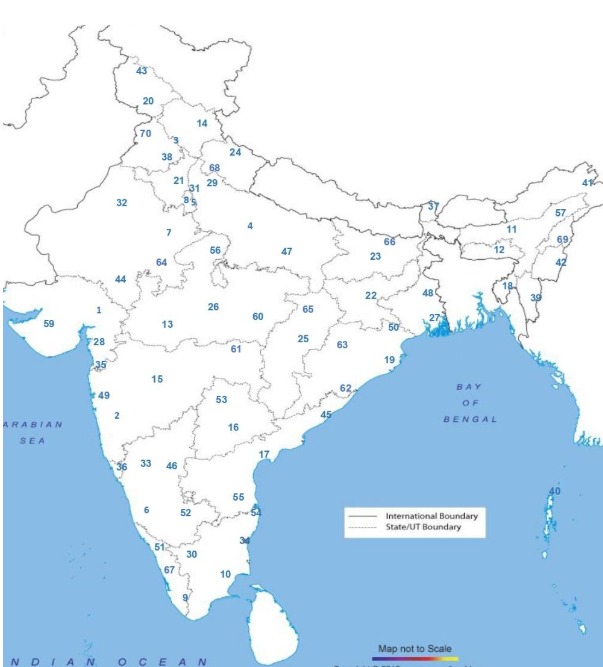
National AMR Surveillance Network (NARS-Net): The network of laboratories is being expanded in a phased manner and currently includes 60 state medical college labs in 33 States/UTs. The list of the sites in the network are as below:

1. BJ Medical College, Ahmedabad, Gujarat
2. BJ Medical College, Pune, Maharashtra
3. Government Medical College, Chandigarh
4. GSVM Medical College, Kanpur, Uttar Pradesh
5. Lady Hardinge Medical College and Associated hospitals, Delhi
6. Mysore Medical college, Mysuru, Karnataka
7. SMS medical College, Jaipur, Rajasthan
8. Vardhman Mahavir Medical college and SJ Hospital, Delhi
9. Govt. Medical College, Thiruvananthapuram, Kerala
10. KAP V. Government Medical College, Tiruchirappalli, Tamil Nadu
11. Gauhati Medical College and Hospital, Guwahati, Assam
12. NEIGRIHMS, Shillong, Meghalaya
13. MGM College and Hospital, Indore, Madhya Pradesh
14. IGMC, Shimla, Himachal Pradesh
15. Govt. Medical College and Hospital, Aurangabad, Maharashtra
16. Osmania Medical College, Hyderabad, Telangana
17. Guntur Medical College, Guntur, Andhra Pradesh
18. Agartala Govt. Medical College, Agartala, Tripura
19. SCB Medical College & Hospital, Cuttack, Odisha
20. Govt. Medical College & Hospital, Jammu, Jammu and Kashmir
21. Pandit Bhagwat Dayal Sharma, Post Graduate Institute of Medical Sciences, Rohtak, Haryana
22. Rajendra Institute of Medical Sciences, Ranchi, Jharkhand
23. Indira Gandhi Institute of Medical Sciences, Sheikpura, Patna, Bihar
24. Govt. Medical College, Haldwani, Uttarakhand
25. Pt. Jawaharlal Nehru Memorial Medical College, Raipur, Chhattisgarh
26. Gandhi Medical College, Bhopal, Madhya Pradesh
27. Calcutta School of Tropical Medicine, Kolkata, West Bengal
28. GMERS Medical College and Civil Hospital, Valsad, Gujarat
29. Lala Lajpat Rai Memorial (LLRM) Medical College, Meerut, Uttar Pradesh
30. Coimbatore Medical College & Hospital, Coimbatore, Tamil Nadu
31. Maulana Azad Medical College (MAMC) and Associated Hospital, Delhi
32. Sardar Patel Medical College (SPMC) and Hospital, Bikaner, Rajasthan
33. Karnataka Institute of Medical Sciences (KIMS), Hubli, Karnataka
34. Indira Gandhi Medical College & Research Institute (IGMC & RI), Puducherry
35. NAMO Medical Education and Research Institute (MERI), Silvassa, Dadra & Nagar Haveli and Daman & Diu
36. Goa Medical College & Hospital, Bambolim, Goa
37. STNM Medical College & Hospital, Gangtok, Sikkim
38. Government Medical College, Patiala, Punjab
39. Zoram Medical College, Falkawn, Mizoram
40. Andaman & Nicobar Islands Institute of Medical Sciences (ANIIMS), Andaman & Nicobar Islands
41. Tomo Riba Institute of Health and Medical Sciences, Naharlagun, Arunachal Pradesh
42. Jawaharlal Nehru Institute of Medical Sciences (JNIMS), Manipur
43. Govt. Medical College, Srinagar, Jammu & Kashmir
44. Rabindranath Tagore Medical College, Udaipur, Rajasthan
45. Andhra Medical College, Visakhapatnam, Andhra Pradesh
46. Vijayanagar Institute of Medical Sciences, Ballari, Karnataka
47. Moti Lal Nehru Medical College, Allahabad, Uttar Pradesh
48. Burdwan Medical College & Hospital, Burdwan, West Bengal
49. Grant Government Medical College & Sir JJ Group of Hospitals, Mumbai, Maharashtra
50. Pt. Raghunath Murmu Medical College & Hospital, Baripada, Odisha
51. Government Medical College, Thrissur, Kerala
52. Bangalore Medical College and Research Institute, Bengaluru, Karnataka
53. Kakatiya Medical College, Warangal, Telangana
54. Madras Medical College, Chennai, Tamil Nadu
55. S.V. Medical College, Tirupati, Andhra Pradesh
56. Gajra Raja Medical College, Gwalior, Madhya Pradesh
57. Jorhat Medical College and Hospital, Jorhat, Assam
58. University College of Medical Sciences & GTB Hospital, Delhi
59. Pandit Deendayal Upadhyay Medical College, Rajkot, Gujarat
60. Netaji Subhash Chandra Bose Medical College, Jabalpur, Madhya Pradesh
Image

Development of SOPs / Tools

AMR Programme Unit at NCDC has developed programme SOPs, which are updated on regular basis, and all the sentinel site laboratories are provided training on the use of these SOPs. The SOPs developed are listed below and are also available on NCDC website (https://ncdc.mohfw.gov.in/programme-sops/):

1. AMR Surveillance SOP 2023 (Version 2)

  • Chapter 1: AMR Surveillance in Priority Bacterial Pathogens under NARS-Net
  • Chapter 2: Broth microdilution colistin susceptibility test for aerobic Gram-negative bacteria
  • Chapter 3: Broth microdilution (BMD) vancomycin susceptibility test for aerobic Gram-positive cocci
  • Chapter 4: Colistin agar test for Enterobacterales & Pseudomonas aeruginosa
  • Chapter 5: Vancomycin agar screen test for Staphylococcus aureus & Enterococcus species
  • Chapter 6: Internal Quality Control for disk diffusion AST
  • Chapter 7: Guidance for submission of AMR isolates for EQAS & AMR alerts
  • Chapter 8: Preservation of bacterial isolates / control strains

2. SOP for WHONET data entry and data reporting

3. Tools for developing facility level antibiogram

AMR surveillance data is been submitted by the network labs to NCDC using the WHONET software on a monthly basis and data quality monitoring online calls are done with the sites to improve the quality of data and its adherence to programme SoP. The revised corrected data received from the network sites is validated and analysed at AMR Programme Unit, CBDDR, NCDC and compiled in the form of an annual reports and semi-annual bulletin. The annual report of last 7 years (from 2017- 2023) are available on NCDC website at: https://ncdc.mohfw.gov.in/reports/

National AMR Data Submission on Global AMR Surveillance and System (GLASS): India enrolled for GLASS in the year 2017 and NCDC is recognized as the national coordinating centre for submitting national AMR Surveillance data on GLASS portal every year. Since 2018, AMR Programme Unit at NCDC has been uploading National AMR surveillance data annually onto GLASS.

External Quality Assessment Scheme:The quality of data submitted under the National AMR surveillance network is ensured through External Quality Assessment Scheme (EQAS) conducted by NCDC, under which all network sites submit isolates every quarter (as per programme guidelines) to the National Reference Laboratory (NRL) established at NCDC. The AMR surveillance network sites are also mandated to submit AMR alert strains for confirmation to NRL at NCDC as and when isolated. The labs under the programme are also required to enrol onto the IAMM EQAS programme.

Trainings & Workshops

Network laboratories under the AMR programme are regularly trained and supported to strengthen surveillance, laboratory capacity, and quality standards across the country.

The Network labs are provided training on WHONET software for data management. The network labs are also trained on developing antibiograms at facility level using WHONET and antibiogram development tools prepared by AMR Programme unit at NCDC are available at https://ncdc.mohfw.gov.in/programme-sops/. The macros for developing antibiogram at facility level are also developed and shared with network sites.

View SOPs

All the Network labs are provided training on Broth microdilution testing for colistin and vancomycin. Since 2022, the labs are also being trained on agar dilution method for colistin AST.

Capacity building on standardisation of basic procedures in Bacteriology including bacterial identification across the network was conducted during 2021-23 using the virtual platform (iECHO platform) in collaboration with CDC, ASM and ECHO-India.

The AMR Surveillance priority pathogen identification modules including algorithms for identification have been developed by group of AMR Committee of Experts.

Other activities carried out for quality improvement include onsite support visits, onsite trainings. During onsite visits, the lab capacity is assessed and hand holding is done for strengthening Internal Quality Control and Proficiency testing in network labs..

Review meetings:Annual Review meetings are conducted to review the status and site-wise progress of the network labs under the programme. During the meeting, the sites facing challenges in working and carrying out activities under AMR Surveillance are discussed in order to make AMR Surveillance robust.

2. Surveillance of Antimicrobial consumption/use:

Surveillance of Antimicrobial consumption is coordinated at selected programme sites by the Epidemiology Division and the network od these sites is named National Antimicrobial consumption networks (NAC-Net). The NAC-Net published their report in July 2023 which is available on NCDC website at:View PDF

3. National Treatment Guidelines:

A common unified National Treatment Guidelines for antimicrobial use in infectious diseases have been released in 2016 and uploaded on the website at: Guidelines/Resources It is to serve as a guide to all the hospitals to formulate their own guidelines on basis of which physicians will be trained. The guidelines are being updated currently.

4. Infection Prevention & Control guidelines and surveillance of healthcare associated infections:

“National Guidelines for Infection Prevention and Control in Healthcare facilities” have been developed with support from WHO and have been disseminated to various stakeholders and also unloaded on NCDC website at Guidelines/Resources
50 sites under the National Programme on AMR Containment have been enrolled for the surveillance of healthcare associated infections. The definitions, SoPs and the portal of the ICMR-AIIMS Healthcare Associated Infections (HAI) surveillance project are being used with support from AIIMS team. For more details on ICMR-AIIMS HAI surveillance network, refer to https://www.haisindia.com/

4. IEC Activities:

Material for IEC has been developed in phased manner and is available on NCDC website at: For Healthcare and Para-professionals In addition, various IEC activities are conducted/coordinated round the year including CMEs in professional organisations, quiz competition in schools, public lectures in academic Institutions and radio programmes, participation in Health fairs etc.

5. Support establishment of State AMR Surveillance Network

One NARS-Net centre in each state is identified as nodal centre for the respective state for establishing state AMR surveillance networks. Under the programme through the nodal centre, sensitisation workshops and trainings are supported for medical colleges in the respective state to submit AMR data as a part of state AMR surveillance network. The nodal centre is supported to clean, analyse AMR surveillance data to generate annual surveillance reports. The state AMR Surveillance networks have been established/initiated in Maharashtra, Kerala, Delhi, Gujarat, Rajasthan, Karnataka, Madhya Pradesh, Telangana and Assam.

Programme SoPs

Standard Operating Procedures (SoPs) developed by NCDC help ensure uniformity, quality, and accuracy in AMR surveillance, reporting, and laboratory practices across the country.