






India Epidemic Intelligence Service Programme
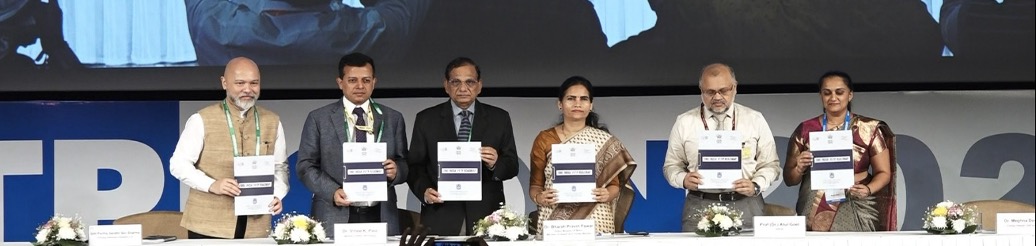
‘One India’ FETP (Field Epidemiology Training Programme) roadmap is an initiative to consolidate the efforts of different government agencies to scale up the field epidemiology training in the country and provides strategic direction for achieving the target of field epidemiology training coverage to all the districts of India in 2030. This roadmap document was launched in February 2023 during FETPICON-2023 at Varanasi by the Minister of State for Health and Family Welfare, Government of India.
India EIS Programme
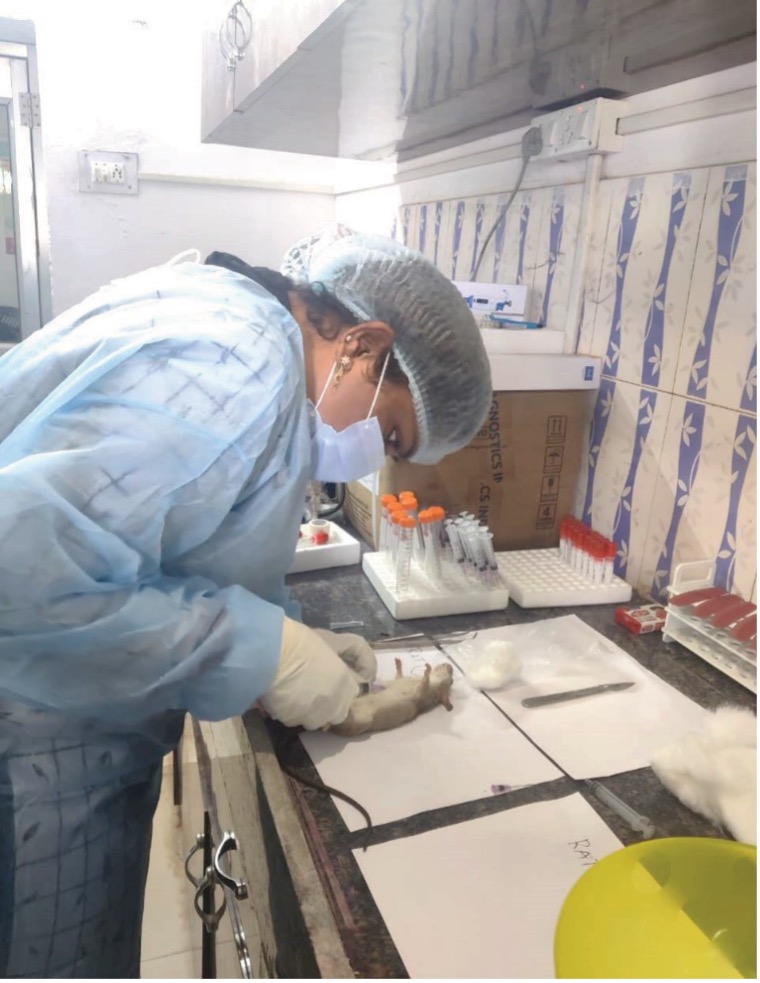
EIS officer collecting rodent sample during Scrub Typhus outbreak investigation, Sundargarh district, Odisha, October 2023
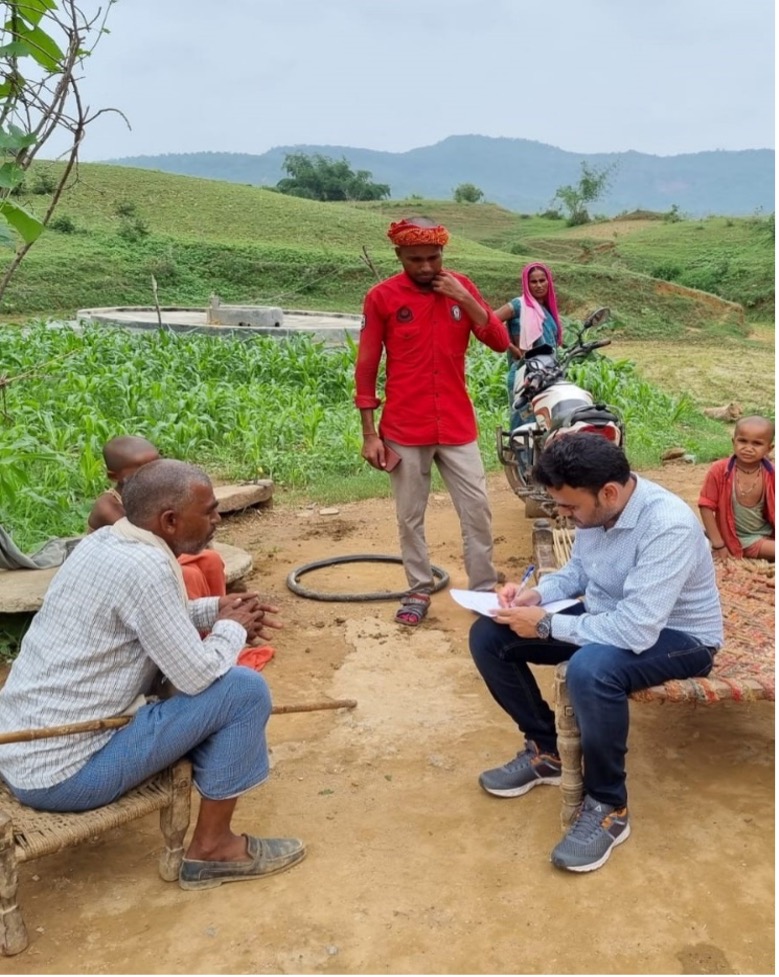
EIS officer interacting with a community member during a diarrheal disease outbreak investigation, Sonbhadra district, Uttar Pradesh, August 2023
The India Epidemic Intelligence Service (EIS) Programme is a 2-years applied epidemiology training run by the NCDC, Delhi. The programme is modelled after the EIS program at the US Centers for Disease Control and Prevention (CDC) and is implemented in technical collaboration with US CDC.
Participants are trained to develop public health skills while working with various public health agencies/programmes in the country. The state and central public health agencies forward the applications of their employees and if selected, they are deputed to NCDC for 2 years. Individual candidates with public health experience can also apply. Selection is through a highly competitive process by a committee of experts. The cost of training is borne by NCDC.
Master in Applied Epidemiology (MAE)
Participants in the India EIS training programme now have the opportunity to earn a Master in Applied Epidemiology (MAE) degree from the H.N.B. Medical Education University, Uttarakhand. The Master programme is integrated with the India EIS training. The participants will have to clear examinations conducted by the University from time to time and fulfil other requirements laid down by the University to earn the degree.
About TEPHINET Accreditation
Training Programs in Epidemiology and Public Health Interventions Network (TEPHINET) is the global network of Field Epidemiology Training Programs (FETPs) that also acts as the global accreditation body for FETPs worldwide. In an effort to continuously improve and strengthen, the India EIS Program at NCDC applied for TEPHINET accreditation in the 7th cycle and was awarded the accreditation in September 2023 at 1st SAFETYNET conference in Canberra, Australia. Thus, ensuring an internationally benchmarked high quality field epidemiology training. For detailed information please download the brochure.
We are now accepting applications for the new cohort 2025-2027. To submit your application, please click here.
Intermediate Field Epidemiology Training Programme (AIIH&PH, Kolkata)
About I-FETP
All India Institute of Hygiene & Public Health, Kolkata (AIIHPH) in collaboration with the National Centre for Disease Control, Delhi (NCDC), Ministry of Health & Family Welfare, Government of India, has initiated a one-year, on-the-job Intermediate Field Epidemiology Training Program (I-FETP) for the state health service officials of West Bengal, Jharkhand, and North-eastern states of India to enhance the skills and capacity of the State/District Epidemiologists, Surveillance and Program Officers in the Field Epidemiology.
I-FETP is modelled on the India Epidemic Intelligence Service programme (EIS) – an initiative by NCDC, in collaboration with the U.S. Centers for Disease Control and Prevention (CDC), Atlanta, USA.
The eligibility criteria for this training programme is a public health official aged less than 50 years working as an epidemiologist or in a public health position at the state or district level (permanent or contractual).
This is a one-year on-the-job training programme that comprises five contact sessions and 47 weeks of field activities at the place of posting. During the training, each officer will be assigned to an expert mentor and a co-mentor to complete Core Activity of Learnings (CALs) like surveillance or programme data analysis, outbreak investigations, epidemiological investigations, writing scientific abstracts and reports, and delivering oral presentations.
We are now accepting applications for the year 2025-2026. To submit your application, please click here Last date till 31st July 2025.
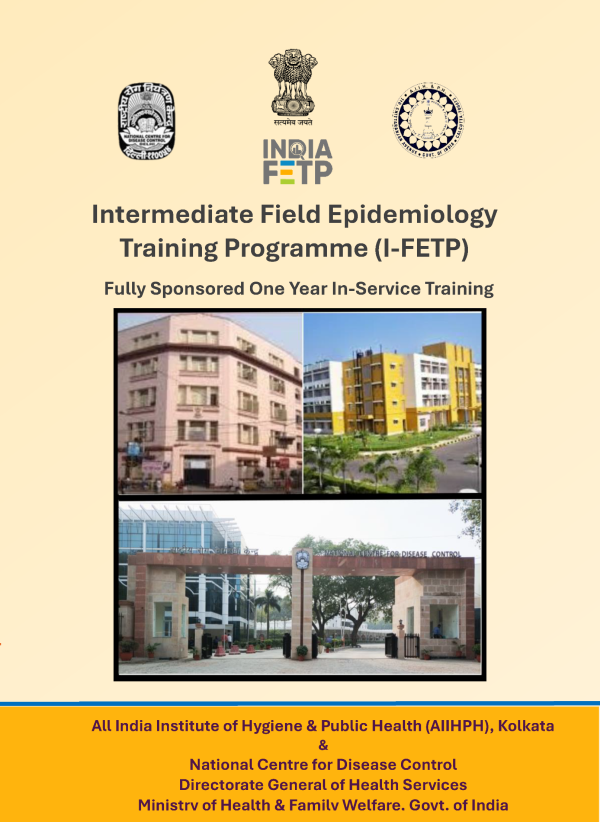
Brochure
Intermediate-Field Epidemiology Training Programme (NIPHTR, Mumbai)
About I-FETP
All India Institute of Hygiene & Public Health, Kolkata (AIIHPH) in collaboration with the National Centre for Disease Control, Delhi (NCDC), Ministry of Health & Family Welfare, Government of India, has initiated a one-year, on-the-job Intermediate Field Epidemiology Training Program (I-FETP) for the state health service officials of West Bengal, Jharkhand, and North-eastern states of India to enhance the skills and capacity of the State/District Epidemiologists, Surveillance and Program Officers in the Field Epidemiology.
I-FETP is modelled on the India Epidemic Intelligence Service programme (EIS) – an initiative by NCDC, in collaboration with the U.S. Centers for Disease Control and Prevention (CDC), Atlanta, USA.
The eligibility criteria for this training programme is a public health official aged less than 50 years working as an epidemiologist or in a public health position at the state or district level (permanent or contractual).
This is a one-year on-the-job training programme that comprises five contact sessions and 47 weeks of field activities at the place of posting. During the training, each officer will be assigned to an expert mentor and a co-mentor to complete Core Activity of Learnings (CALs) like surveillance or programme data analysis, outbreak investigations, epidemiological investigations, writing scientific abstracts and reports, and delivering oral presentations.
We are now accepting applications for the year 2025-2026. To submit your application, please click here Last date till 31st July 2025.
Brochure
Field Epidemiology Programme in One Health – SectorConnect
SectorConnect: Enhancing Preparedness for Integrated Response Field Epidemiology Programme in One Health (FEP OH)
SectorConnect FEP OH is a 3-month on-the-job multi-sectoral capacity-building program for professionals from human health, animal husbandry, wildlife, food safety, and points of entry, etc. at the district level using the One Health approach.
The primary goal of this initiative is to strengthen the system’s capacity to respond to public health threats through a multisectoral collaborative approach, enhanced intersectoral coordination, cross-leaning, and effective communication. It aims to enhance integrated response through surveillance data analysis & information sharing, and joint outbreak investigation using One Health approach at the field level.
The 3 months are divided into contact session period (10%) and field interval (90%). There are a total of three contact sessions (one contact session per month, and each session is of three days), which are conducted at a venue within the state. Between each contact session is field interval of one month (two field intervals), wherein the trainee officers, while at their duty stations, complete their field assignments under the mentorship of medical and veterinary college faculty. These sessions cover a broad spectrum of topics, including epidemiology, One Health, disease surveillance, joint outbreak investigation, biosafety and biosecurity, risk assessment, risk communication, community engagement, WASH (water, sanitation, and hygiene), vaccination, international health regulations (IHR), IHR-PVS (Performance of Veterinary Services), and stakeholder analysis. During the contact session, officers also participate in case studies, group exercises and interactive quizzes designed on application of one health approach in local context.
Pilot Batch – 1
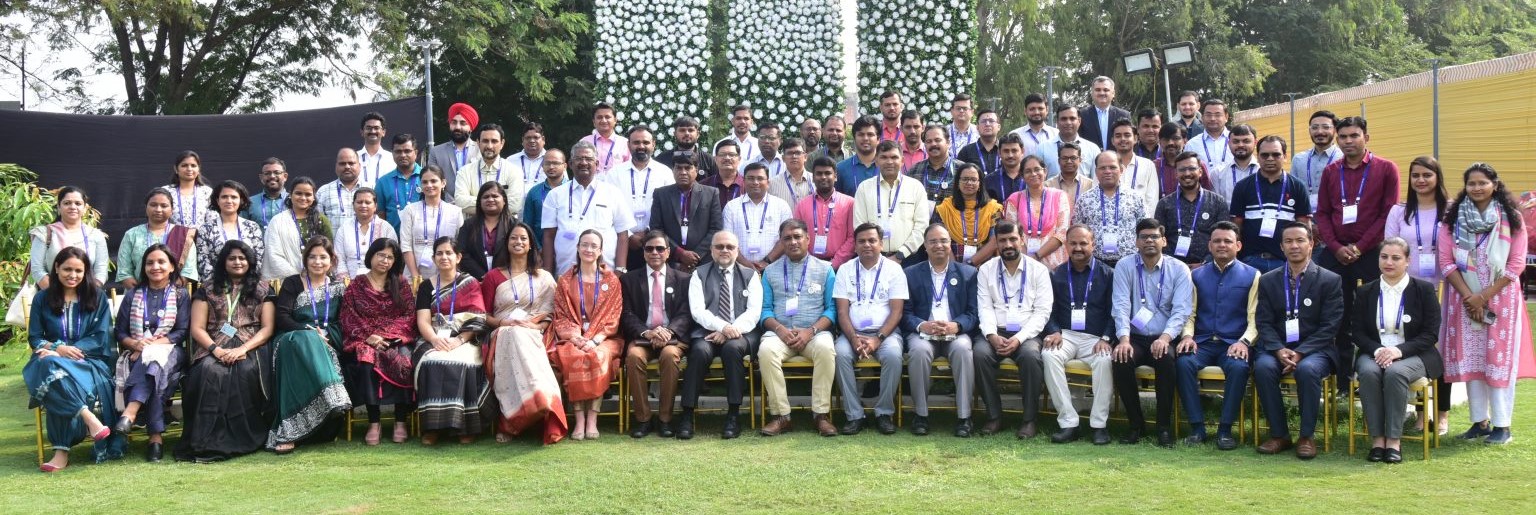
The pilot batch of SectorConnect FEP OH has been successfully completed across nine districts under the Narmada Division of Gujarat State, spanning from December 2023 to February 2024. To mark the paradigm shift that SectorConnect represents, the brand color of the training is “Purple” – the color seen during dawn, marking a time of change. SectorConnect is the dawn of a new era in collaborative preparedness, laying the groundwork for a safer and healthier future for all.
Pilot Batch – 2
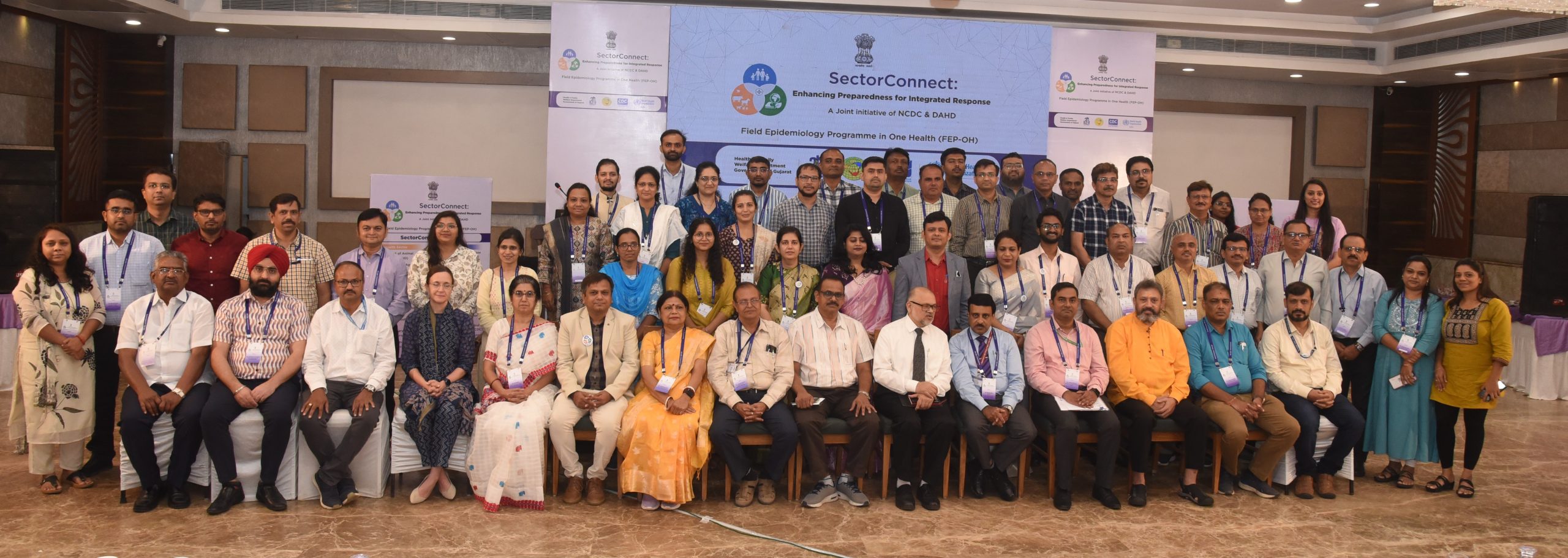
NCDC in collaboration with DAHD completed the training of second batch of SectorConnect Field Epidemiology Programme in One Health (FEPOH) at Ahmedabad, Gujarat on 12 July 2024. The valedictory session was graced by DGHS Prof (Dr) Atul Goel, Assistant commissioner Animal husbandry and dairying Dr Adhiraj Mishra, Director AIIHPH Dr Ranjan Das, Assistant director Public Health Gujarat Dr R B Patel, State surveillance Officer Gujarat Dr Jayesh Katira, Deputy Director Animal Husbandry Gujarat Dr Amit Kanani, Assistant Director (Technical) FSSAI Gujarat, Resident Advisor FETP CDC, India Dr Kristin VanderEnde among others. From the concluding batch two teams Vadodara and Amreli received best presentation award for their outbreak investigations from Prof (Dr) Atul Goel. In all 35 participants representing human health and animal health from 6 districts, 2 municipal corporations and 1 APHO completed the training under the mentorship of 7 mentors from medical and veterinary colleges.
SectorConnect: FEP OH journey starts in Telangana (494.68 KB)

SectorConnect Short Course FEP-OH brochure (10.74 MB)
Report on Stakeholder Engagement Workshop (8.18 MB)
SectorConnect FEP OH Pilot Report (3.69 MB)
Regional Field Epidemiology Training Programme (FETP)
NICD has been designated as the WHO Collaborating Centre for Epidemiology and Training since 1996. A three-month course in Field Epidemiology was initiated in the same year and has been conducted annually since then. This programme is one of the most prestigious public health training courses in the South-East Asia Region (SEAR), designed for medical officers working in the field of public health.
Objective of the Programme
The objective of the course is to strengthen the technical capabilities and skills of health personnel by providing practical training in field epidemiology, health programme management, and the use of computers in public health.
Expected Outcomes
- Detect epidemics through early warning signals
- Conduct epidemic investigations and field surveys
- Institute appropriate and timely responses for prevention and control of outbreaks
- Address health impacts of disasters and environmental health issues
- Collect laboratory specimens and learn proper storage and transportation techniques
- Provide leadership in control of endemic and epidemic-prone diseases
- Design, implement and evaluate disease surveillance systems
- Evaluate disease prevention and control measures
- Conduct epidemiological and statistical analysis of complex datasets
- Use computers effectively for data management, graphics and presentations (EPI INFO)
- Develop effective communication skills in public health
- Prepare, present and publish technical reports and articles
- Remain prepared for public health emergencies
- Train other health professionals
Training Methodology
The training methodology includes lectures, technical discussions, modular exercises, institutional visits, and extensive field exercises. A comprehensive review of the course was jointly undertaken by NICD, WHO-SEARO and experts from Thailand, Indonesia and Bangladesh during 2006–2007. Based on this review, ten standardized training modules were developed and are currently used for training.
Structure of the Training Programme
- Initial Classroom Training (5 Weeks): Covers concepts of field epidemiology, epidemiological tools, biostatistics, outbreak investigation, disease surveillance, and disease control programme management.
- Field Training (6 Weeks): Includes community-based surveys, data collection and analysis, report writing, outbreak investigations, and evaluation of district-level surveillance systems.
- Final Phase: Finalization of field reports, presentations, and post-training evaluation.
Faculty
Faculty members include senior officers from NICD, experts from other premier institutions in Delhi, Directorate General of Health Services, and the regional and country offices of WHO.
Past Training Highlight
During the year 2008–09, the training programme was conducted from 12th August to 11th November 2008. A total of 13 participants from India, Maldives, Bhutan, Nepal, and Sri Lanka attended the programme.
Regional Field Epidemiology Training Programme – 2023
The Regional Field Epidemiology Training Programme 2023 continued the legacy of high-quality epidemiological training, focusing on strengthening regional public health preparedness, surveillance systems, and outbreak response capacity.
Regional Field Epidemiology Training Programme 2023 (380.96 KB)
Two-week Field Epidemiology Training Programme (FETP)
Countries of the World Health Organization South-East Asia Region (WHO-SEAR) show differences in their capacities for disease surveillance and response. However, all countries share the need to strengthen core public health capacities for effective implementation of the International Health Regulations (IHR, 2005) at national, state and district levels.
Experience has shown that it is not feasible for many countries to spare medical officers for long-duration training programmes such as the two-year or three-month Field Epidemiology Training Programmes. Keeping this limitation in mind, and based on experiences from similar initiatives, the National Institute of Communicable Diseases, with the support of the World Health Organization, developed a two-week competency-based training programme.
This short-duration programme aims to build essential skills among peripheral health professionals in basic disease surveillance, epidemic preparedness and outbreak management. It serves as an important step towards strengthening human resources for public health and improving preparedness for managing outbreaks and epidemics in the region.
The overall objective of the course is to strengthen the skills of peripheral health professionals in basic epidemiology and its practical application in disease surveillance and response systems. The faculty for the programme includes experts from NICD and other institutions, including professionals who have earlier completed the three-month FETP training.
The training programme covers core public health topics such as basic epidemiology, disease surveillance, epidemic preparedness, outbreak investigation and response, field-based study design, field exercises, institutional data analysis, report writing and presentation. Course content is adapted according to the needs and specific public health context of the country where the training is conducted.
The learning methodology consists of one week of classroom-based learning followed by one week of field-based assignments. The programme uses interactive lecture-cum-discussions, group work, practical field exercises, report writing and plenary presentations, following a “learning-by-doing” approach.
Monitoring and evaluation of the programme are carried out using pre- and post-training assessment tests. Feedback from participants is regularly analyzed and used to improve the course content, training tools and overall methodology. The programme is continuously refined based on lessons learned from field experiences.
Regional Training Programme on Prevention and Control of Communicable Diseases for Paramedics
Paramedical health personnel are an essential part of public health services and play a vital role in early detection of disease outbreaks in the community. To effectively manage and control infectious and preventable diseases, it is important to continuously strengthen their skills and improve the quality of disease surveillance data.
While several training programmes exist for medical professionals, there has traditionally been limited focus on structured training for paramedical personnel. Recognizing this gap, the National Institute of Communicable Diseases (NICD) introduced a four-week Regional Training Programme on Prevention and Control of Communicable Diseases in the year 1999 for paramedical health personnel from the South-East Asia Region.
This tailor-made programme is conducted once every year and aims to strengthen the epidemiological skills of paramedical personnel. So far, around 150 participants from Bhutan, Maldives, Myanmar, Nepal, Sri Lanka, and India have successfully completed this training at NICD.
The main objective of the course is to enhance the technical skills of paramedical personnel through practical training in prevention and control of communicable diseases, along with the use of computers for surveillance activities.
The course duration is four weeks, with a strong focus on field projects and hands-on demonstrations. The training methodology includes lectures, technical discussions, modular exercises, demonstrations, institutional visits, and field exercises. Participants are also trained in basic computer skills required for disease surveillance.
The training programme covers important topics such as basic epidemiology, basic statistics, disease surveillance, epidemic preparedness, outbreak investigation and response, field-based studies, surveys, and report writing along with presentation of findings.
Monitoring and evaluation of the course are carried out using pre- and post-training assessment tests. Participant feedback is regularly reviewed and used to further improve the quality and effectiveness of the programme.
REGIONAL FIELD EPIDEMIOLOGY TRAINING PROGRAMME ON PREVENTION & CONTROL OF COMMUNICABLE DISEASES For Para-Medical Personnel of South East Asia Region (18th Nov - 13th Dec 2024) (2.77 MB)