Introduction
Leptospirosis is an important public health concern in India, particularly in coastal and other high-risk regions, where it contributes to significant morbidity and mortality. Recognizing the public health importance of the disease, the Government of India launched a Pilot Project on Prevention and Control of Leptospirosis as a new initiative during the XI Five-Year Plan. The pilot demonstrated the feasibility and replicability of the proposed strategies, leading to the formal launch of the Programme for Prevention and Control of Leptospirosis (PPCL) during the XII Five-Year Plan.
The programme was initially implemented in six endemic areas across five States—Gujarat, Kerala, Tamil Nadu, Maharashtra and Karnataka—and the Union Territory of Andaman & Nicobar Islands.
Based on epidemiological evidence and the emergence of laboratory-confirmed cases in additional areas, the programme was subsequently expanded. In FY 2019–20, coverage was extended to Uttar Pradesh, Assam, Goa and the Union Territory of Dadra and Nagar Haveli and Daman & Diu. Further expansion in FY 2022–23 included Punjab, Odisha, Andhra Pradesh and West Bengal, bringing programme coverage to 181 districts across 12 States and 2 Union Territories.
The programme focuses on strengthening surveillance, laboratory diagnosis, case management, awareness and intersectoral coordination for prevention and control of leptospirosis.
Objective - To reduce morbidity and mortality due to leptospirosis in humans.
Programme Components
The programme focuses on the following key strategies:
- Human Resource Development: Development of trained manpower for diagnosis, case management, prevention and control of leptospirosis, and intersectoral coordination
- Strengthening Surveillance:Strengthening diagnostic capacity of laboratories in programme States/UTs for timely and accurate diagnosis.
- Laboratory Strengthening: Strengthening surveillance of leptospirosis in humans for early detection of cases and outbreaks.
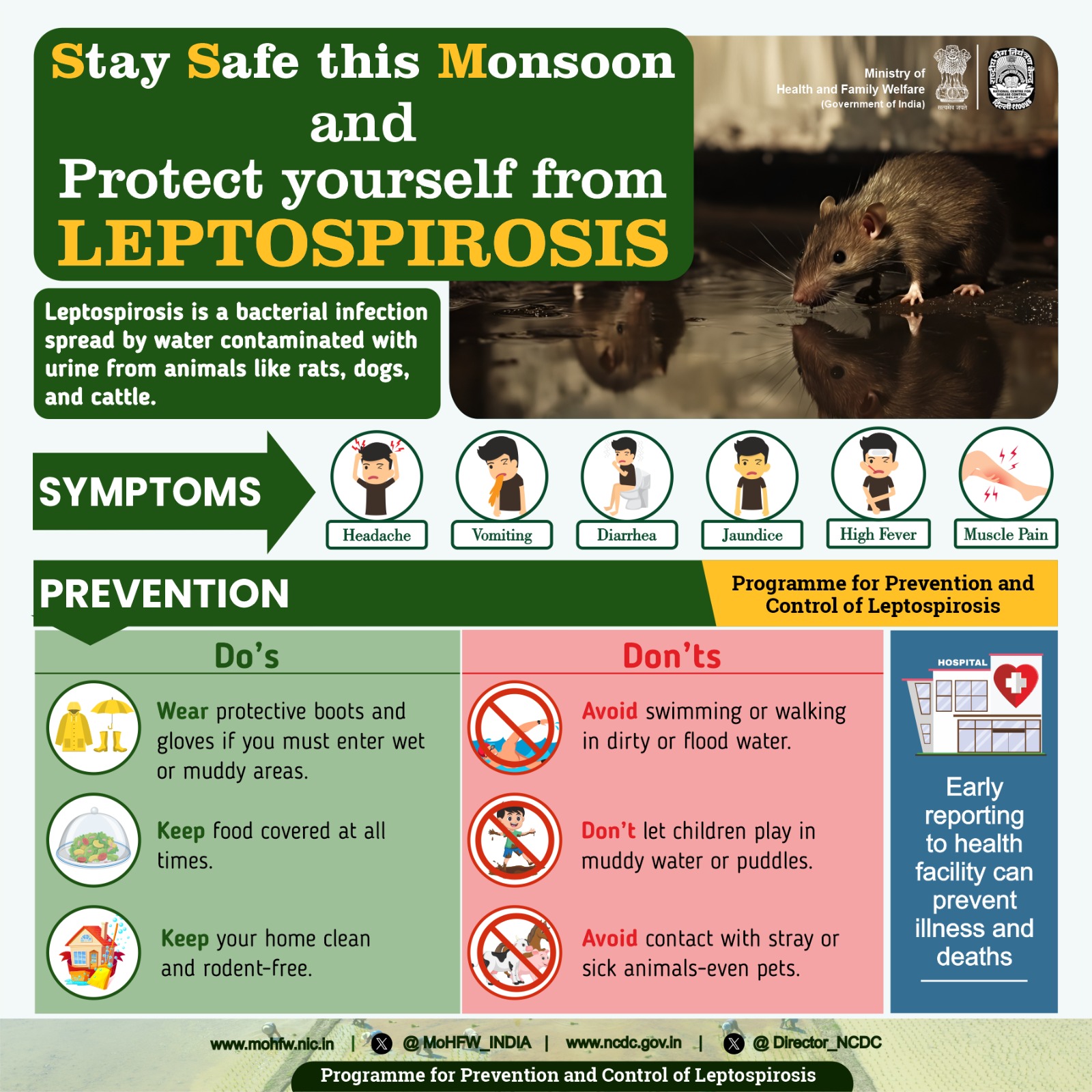
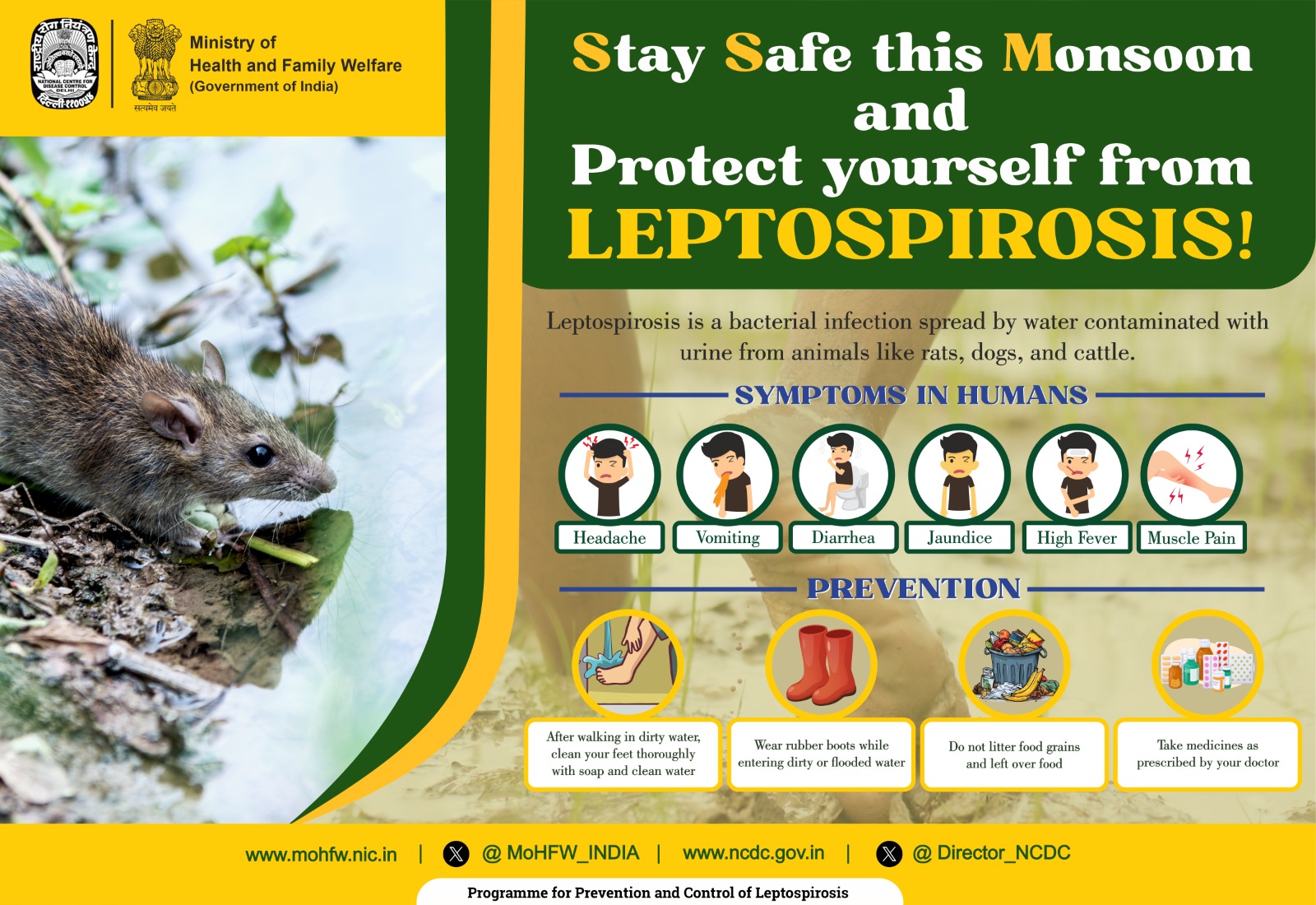
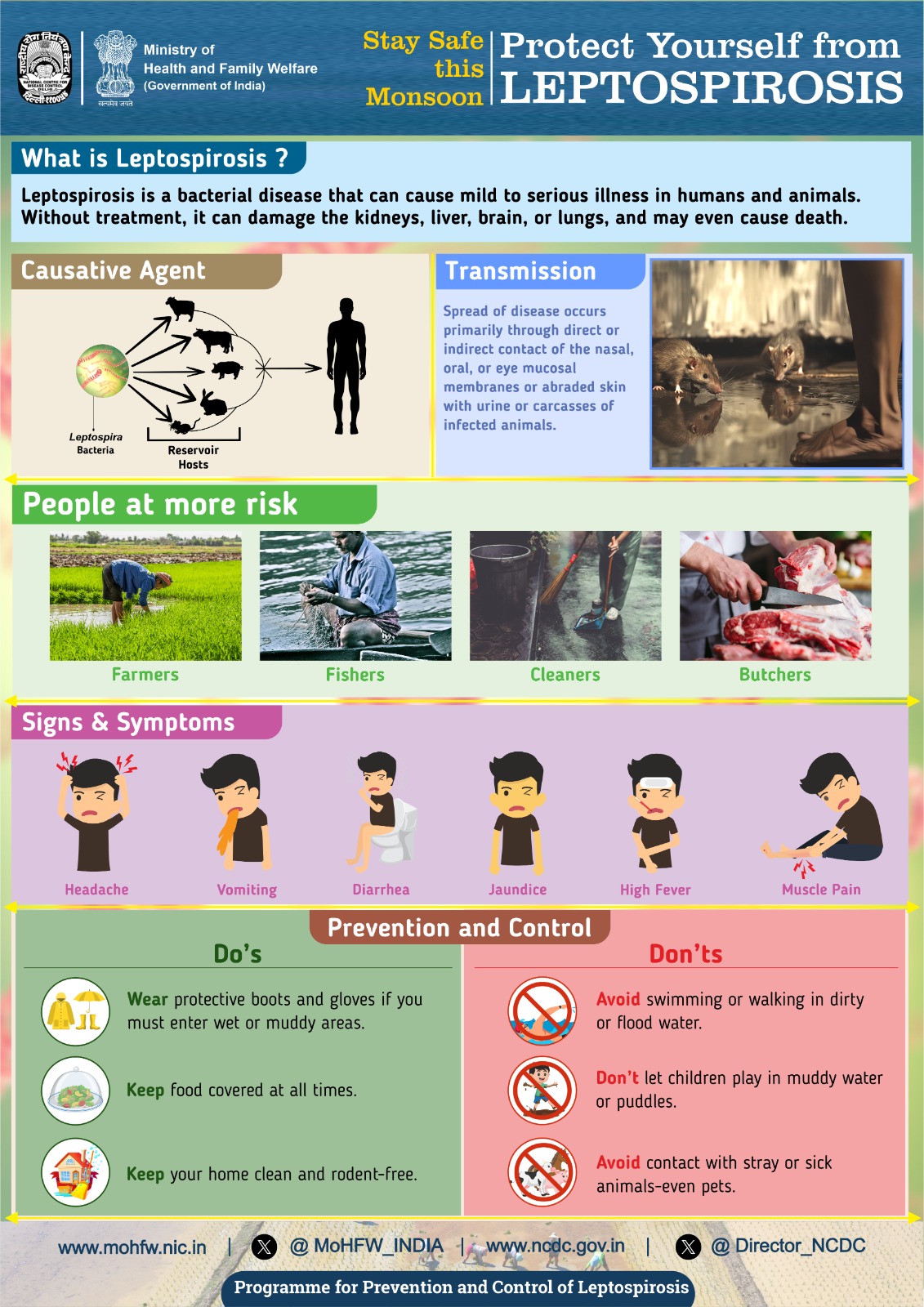
- Awareness and Risk Communication: Promoting awareness regarding early detection, timely reporting and appropriate treatment of leptospirosis.
- Strengthening Patient Management: Advocacy for strengthening patient management facilities and preparedness at different levels for appropriate management of cases.
- Intersectoral Coordination: Strengthening coordination at State and district levels for early detection, prevention and control of outbreaks